In Morocco, eating is never just about eating: it is about sharing. A tagine set in the middle of the table, bread to scoop up each morsel, mint tea poured from on high so it froths in the glasses. Moroccan cuisine is one of the richest in the world, and it is often what our travellers talk about first when they return home.
Spices, dried fruit, fresh herbs, slow cooking: here are the dishes not to be missed, a few regional specialities you will rarely taste anywhere else, and our advice for savouring Morocco the way we live it at home, in the Dades Valley.
The great classics
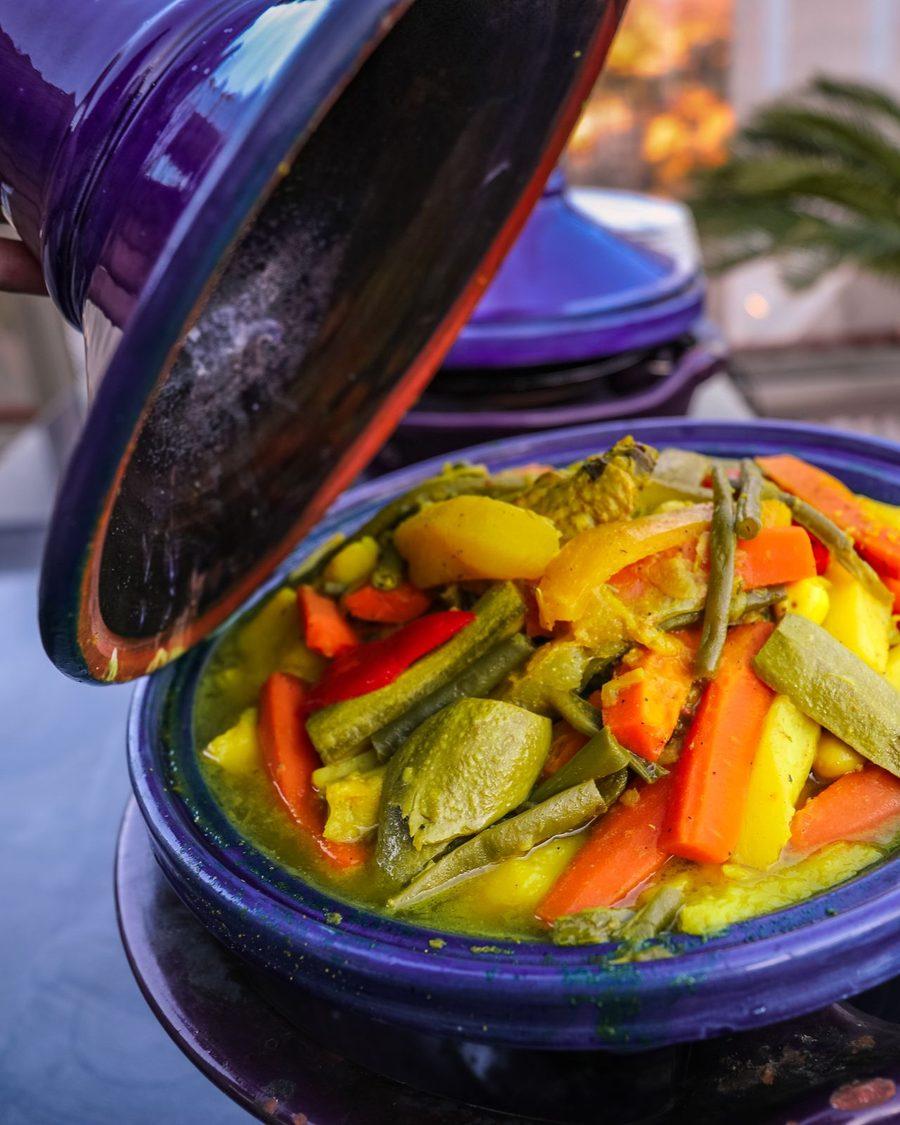
Tagine
It is both a dish and the conical-lidded earthenware pot in which it slowly simmers. There are dozens of versions: chicken with preserved lemon and olives, lamb with prunes and almonds, kefta with eggs (minced-meat balls in tomato sauce), or a tagine of seasonal vegetables. Every region, and almost every family, has its own recipe.
Couscous
Hand-rolled semolina, steamed above a broth of meat and vegetables. Traditionally, it is the Friday dish, shared with family after prayers. Seven-vegetable couscous is the most classic; the tfaya version, with caramelised onions and raisins, is a sweet-and-savoury marvel.
Pastilla
A very thin sheet of pastry (warqa) filled with poultry, almonds and eggs, scented with cinnamon and dusted with icing sugar. This sweet-and-savoury pairing surprises at first, then wins you over. It also comes as a seafood pastilla, without sugar.
Harira
A thick soup of tomatoes, lentils, chickpeas and fresh herbs. It is the soup that breaks the fast during Ramadan, served with dates and chebakia, but it is enjoyed all year round.
Regional specialities
- Tanjia from Marrakech: beef or lamb, garlic, preserved lemon and cumin, sealed in a clay jar and left overnight in the oven that heats the hammam's water. A quintessentially Marrakchi speciality.
- Bissara from the north: a dried broad bean soup with olive oil and cumin, hugely popular at breakfast in Fes and Chefchaouen, especially in winter.
- Medfouna from the Tafilalet: a "Berber pizza" stuffed with meat, onions and spices, a speciality of Rissani and the Merzouga area. A delicious stop on the road to the desert.
- Grilled fish in Essaouira: down at the port, you pick your sardines, sea bream or squid, which are grilled before your eyes.
- Amlou from the Souss: a spread of roasted almonds, argan oil and honey, to enjoy on warm bread at breakfast.
Moroccan breakfast and afternoon treats
- Msemen: a flaky flatbread cooked in a pan, served with honey and butter.
- Baghrir: the light "thousand-hole pancake", drizzled with melted butter and honey.
- Sfenj: a fried doughnut, bought piping hot from street stalls in the morning.
- Gazelle horns (kaab el ghzal): small crescent-shaped pastries filled with almond paste and scented with orange blossom.
- Chebakia: flower-shaped biscuits, fried and coated in honey and sesame.
Mint tea, a ritual
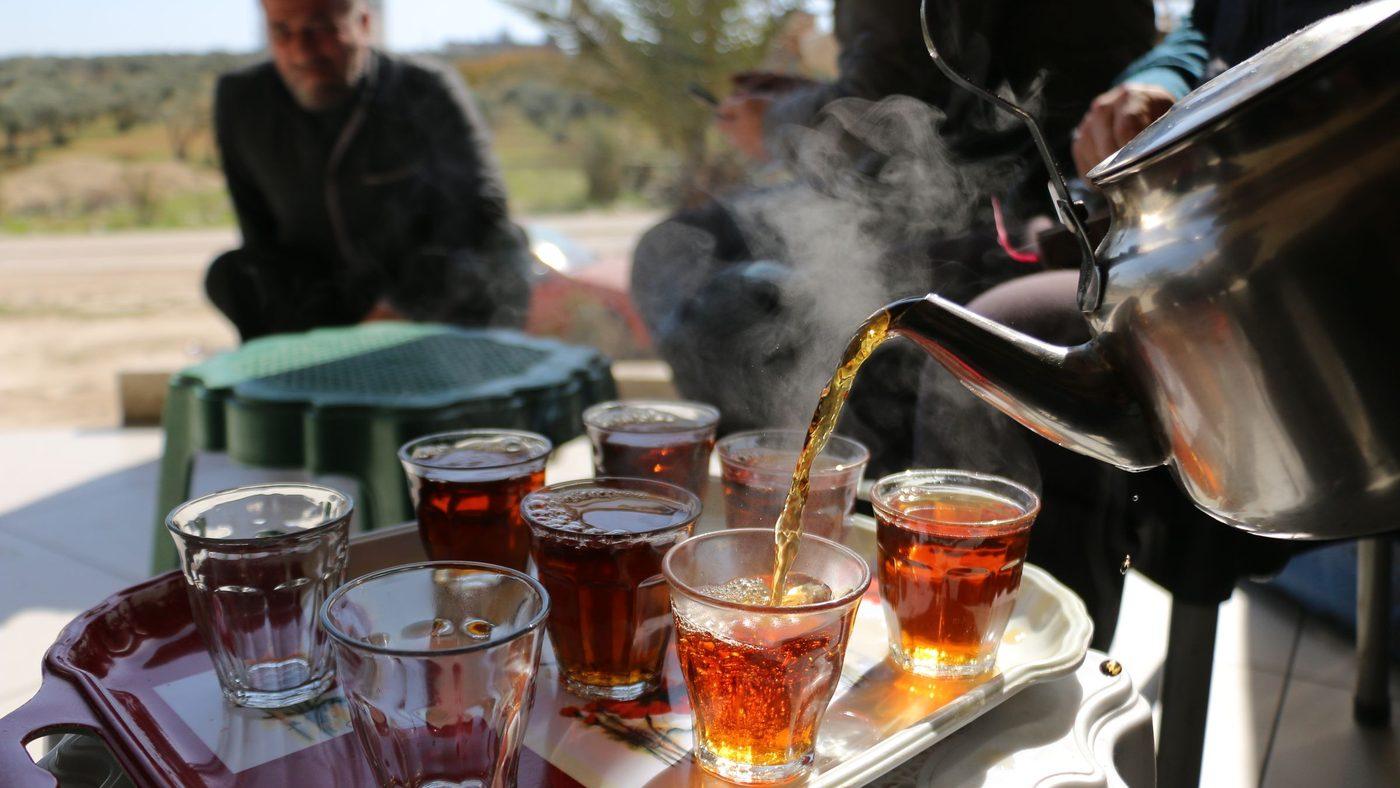
Green tea, fresh mint and sugar: atay is served at any hour as a sign of welcome. It is poured from a height to aerate it and create a light froth, and you will often be offered several glasses. As a popular saying goes, the first is bitter like life, the second strong like love, the third sweet like death. Turning down the first glass would be almost impolite; accepting all three is a true gesture of friendship.
Spices and the flavours of the market
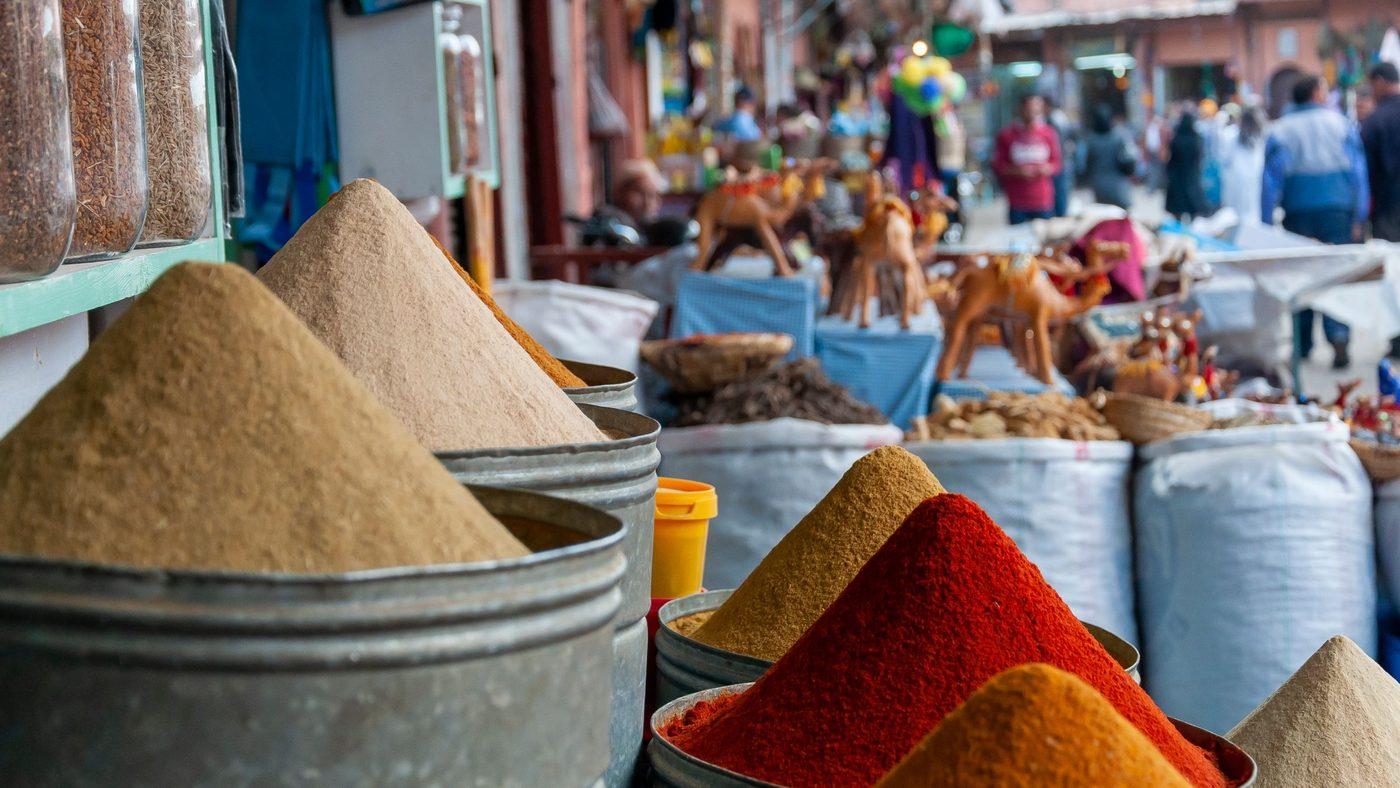
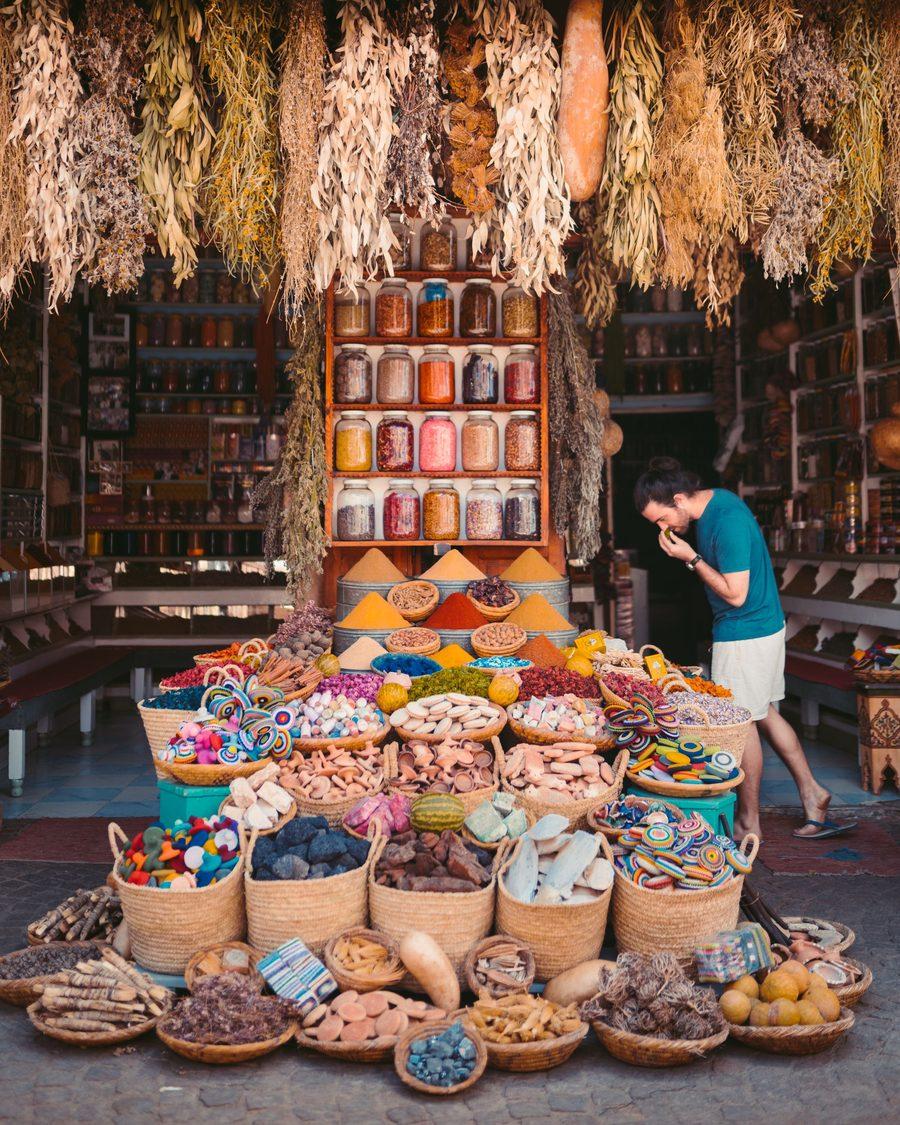
Cumin, paprika, turmeric, ginger, cinnamon, saffron… and the famous ras el-hanout, a blend of around twenty spices whose recipe every spice merchant jealously guards. Add preserved lemon, olives, argan oil and orange blossom water, and you have the palette of Moroccan cuisine.
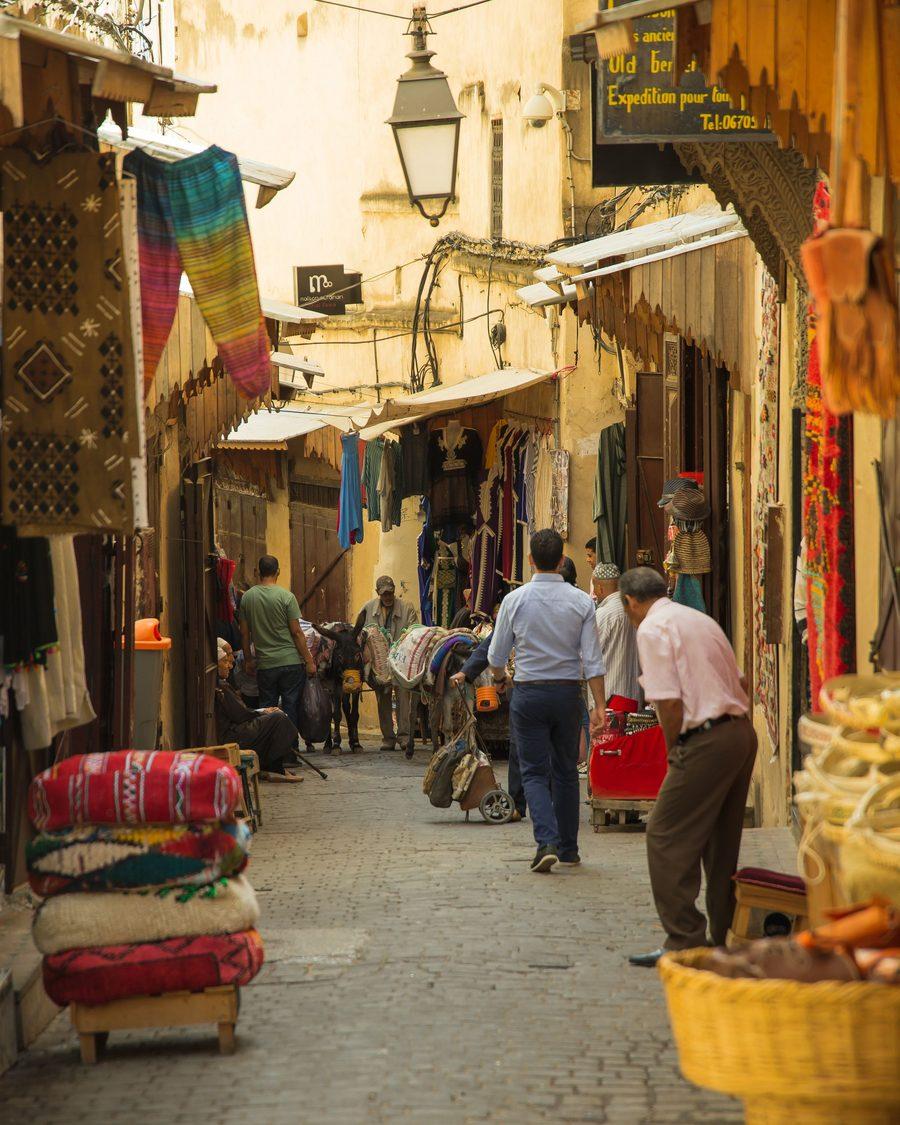
The souks are the best place to buy spices. Choose stalls where you are invited to smell and taste, and buy in small quantities: fresh spices make all the difference.
Where to eat on your trip
- In a family home: nothing beats a meal with a local family, which we can arrange in the Atlas or the Dades Valley.
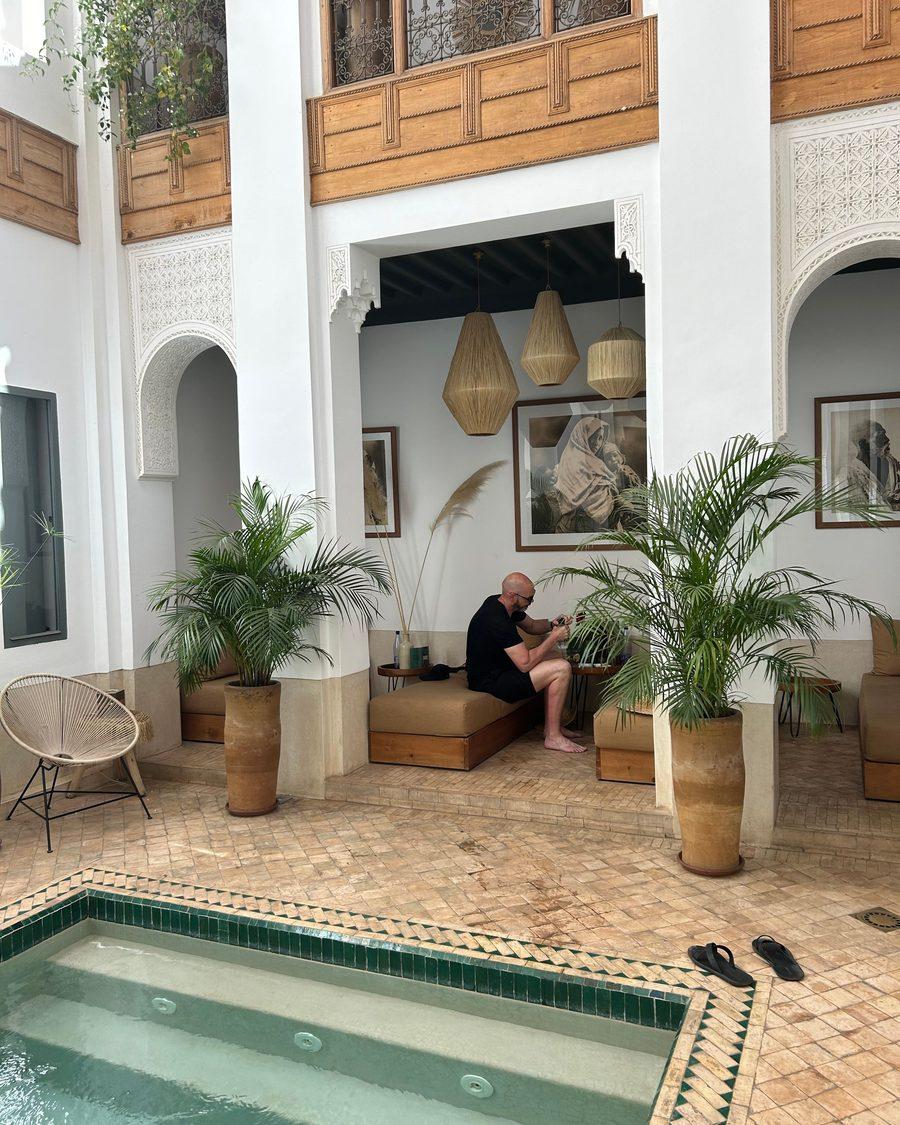
- At your riad: many riads serve remarkable home cooking, often by reservation.
- On Jemaa el-Fna square: the evening food stalls are an experience in their own right. Choose the ones where Moroccans eat.
- In the restaurants of Gueliz or the medina: for reinvented Moroccan cuisine in an elegant setting.
- During a cooking class: from the market to the tagine, the best way to bring Morocco home with you.
Table etiquette
- Traditionally, people eat with the right hand, using bread as a spoon. Cutlery is always offered to travellers.
- From a shared dish, you help yourself from the section in front of you.
- Bread is sacred: it is never thrown away.
- Alcohol is not served everywhere: you will find it in hotels and in some licensed restaurants.
- Vegetarians travel easily: vegetable tagines and couscous, Moroccan salads, soups.
Levart Voyage's food-lover tours
We can add a culinary dimension to your journey: a cooking class in Marrakech or Fes, lunch with a Berber family, a fish tasting at the port of Essaouira. Our Imperial Cities tour is ideal for lovers of refined city cuisine, while The Grand Tour lets you taste the whole country, from the medinas to the ocean.
Frequently asked questions
What is the most typical dish in Morocco?
Tagine and couscous are the most iconic. But pastilla, harira and mint tea are just as much a part of the country's culinary identity.
Is Moroccan food spicy?
It is highly aromatic but rarely hot. Spices are used to give dishes depth; harissa, which is stronger, is usually served on the side.
Can you eat street food in Morocco?
Yes, and it's a wonderful experience. Choose busy stalls where the food is cooked in front of you, and favour well-cooked dishes, especially at the start of your stay.
Is it easy to travel in Morocco as a vegetarian?
Yes. Vegetable tagines, seven-vegetable couscous, bissara, zaalouk (smoky aubergine dip) and the many Moroccan salads offer plenty of choice.
Which food souvenirs should you bring back from Morocco?
Spices and ras el-hanout, culinary argan oil, amlou, dates, orange blossom or rose water, and a small earthenware tagine to get you started at home.
Can you arrange a cooking class?
Yes, in Marrakech, in Fes or with a family in the south. Let us know via our enquiry form or on WhatsApp, and we'll build it into your itinerary.