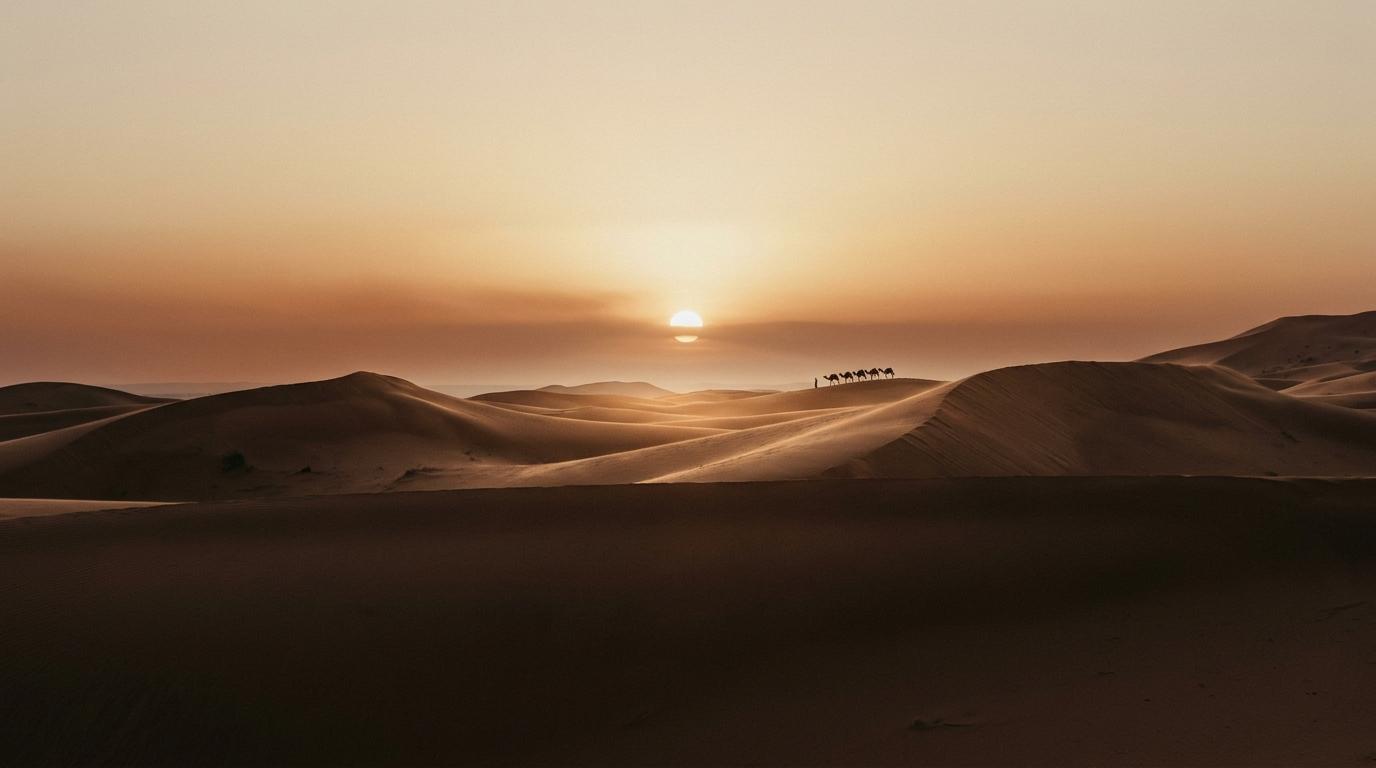
A night in the desert is often the very reason people dream of Morocco. The moment your camel comes to a halt at the top of a dune, the sun slips behind a horizon of sand, and then the silence, the campfire and a sky so thick with stars you can hardly believe it.
You still have to choose well, though: which desert, how many nights, what kind of camp? Our team lives in Boumalne Dadès, on the road to the Sahara. Here is the advice we give our travellers so that this night lives up to their dreams.
Merzouga, Zagora or Agafay: which desert should you choose?
In Morocco, the word "desert" is often used for very different landscapes. It's best to know where you're heading:
| Location | Landscape | From Marrakech | Our view |
|---|---|---|---|
| Erg Chebbi (Merzouga) | Great golden dunes, up to 150 m | 2 days' drive (with a stopover) | The most spectacular |
| Erg Chigaga (M'Hamid) | Wild dunes, 4x4 access | 2 days' drive | For lovers of solitude |
| Dunes near Zagora | Small dunes | 1 day's drive | A foretaste, not the great Sahara |
| Agafay | Stony desert, no dunes | About 45 min | An evening without a long drive |
Erg Chebbi, near Merzouga, is our recommendation for a first visit: immense dunes that change colour throughout the day, a tarmac road right to the foot of the dunes and a wide choice of quality camps.
Erg Chigaga, beyond M'Hamid El Ghizlane, has to be earned: several dozen kilometres of 4x4 track. In return, you'll find a sense of complete isolation.
How many nights should you plan?
- One night: the classic experience, enough to enjoy both sunset and sunrise.
- Two nights: our advice if you have the time. The second day lets you explore the surroundings by 4x4, meet a nomadic family or simply do nothing at all, which is a rare luxury.
From Marrakech, allow at least three days there and back for Erg Chebbi. From Fes, two days are enough to reach the dunes. The most enjoyable option is to cross the country: arrive via Marrakech and leave towards Fes, or the other way round.
What happens during a night in the desert?
- Arrival in the late afternoon at the foot of the dunes, where you leave your large luggage in the vehicle.
- The camel ride (about an hour) or the 4x4 transfer to the camp.
- Sunset from the top of a dune, the most photographed moment of the trip.
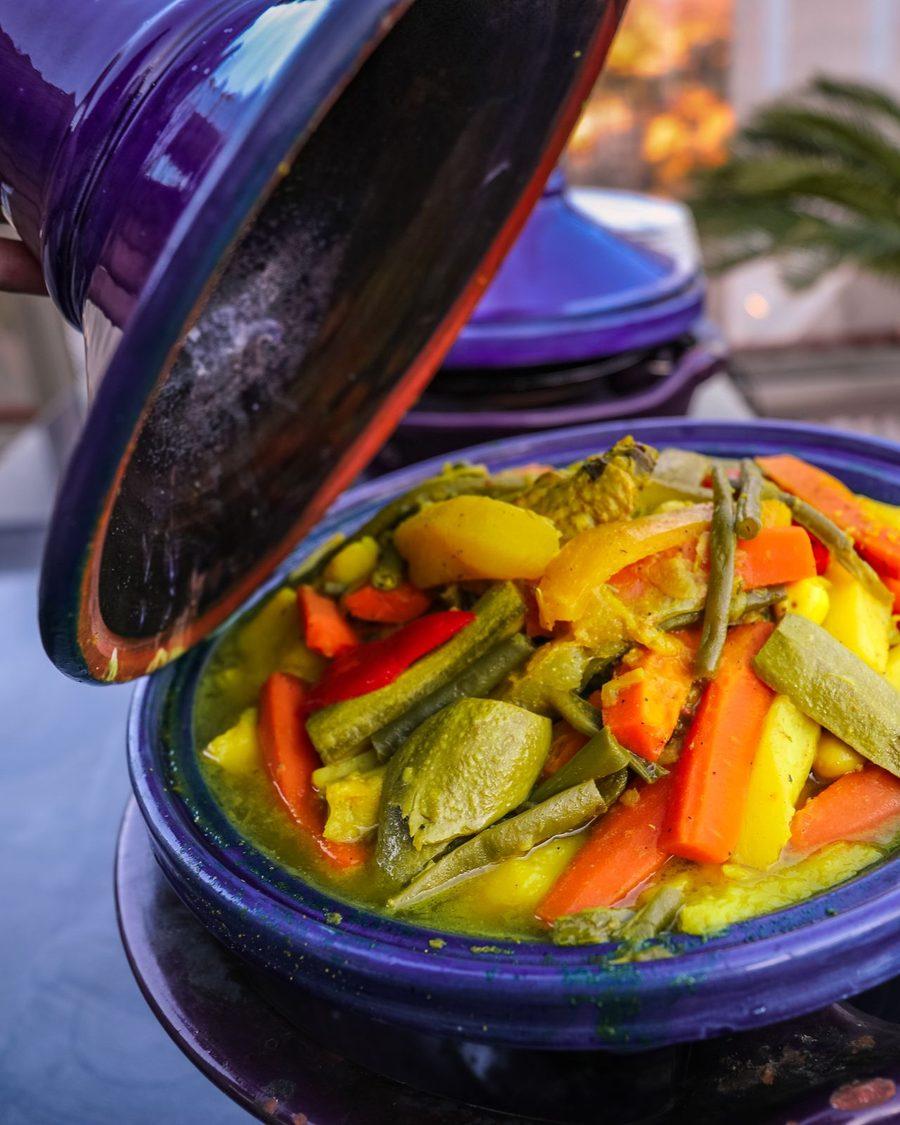
- Dinner at the camp, often a tagine or a hot soup, followed by music around the fire.
- The night under the stars, far from any light pollution.
- Sunrise over the dunes, before breakfast and the journey back.
Which camp should you choose?
The standard camp
Simple tents, shared facilities and a convivial atmosphere. Perfect for adventurous travellers who above all want to live the experience.
The comfort camp
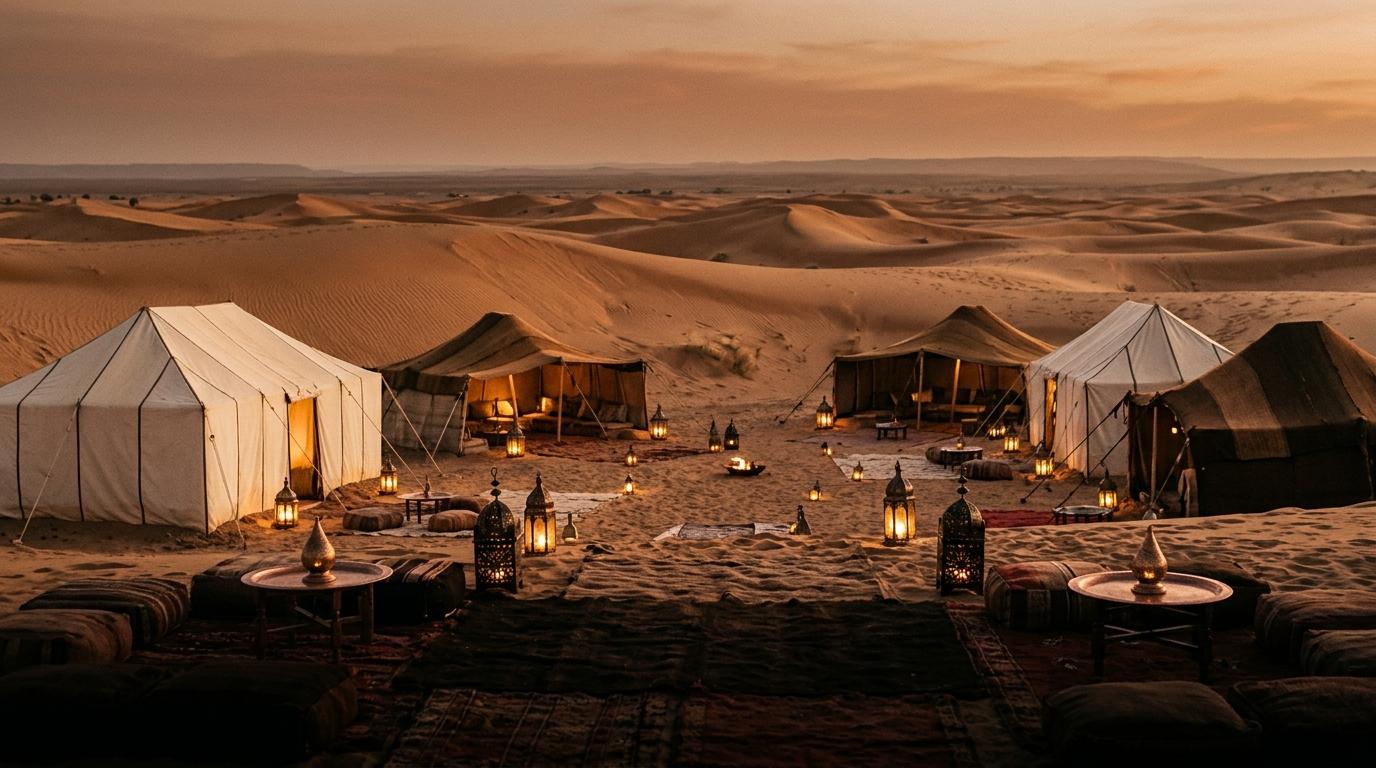
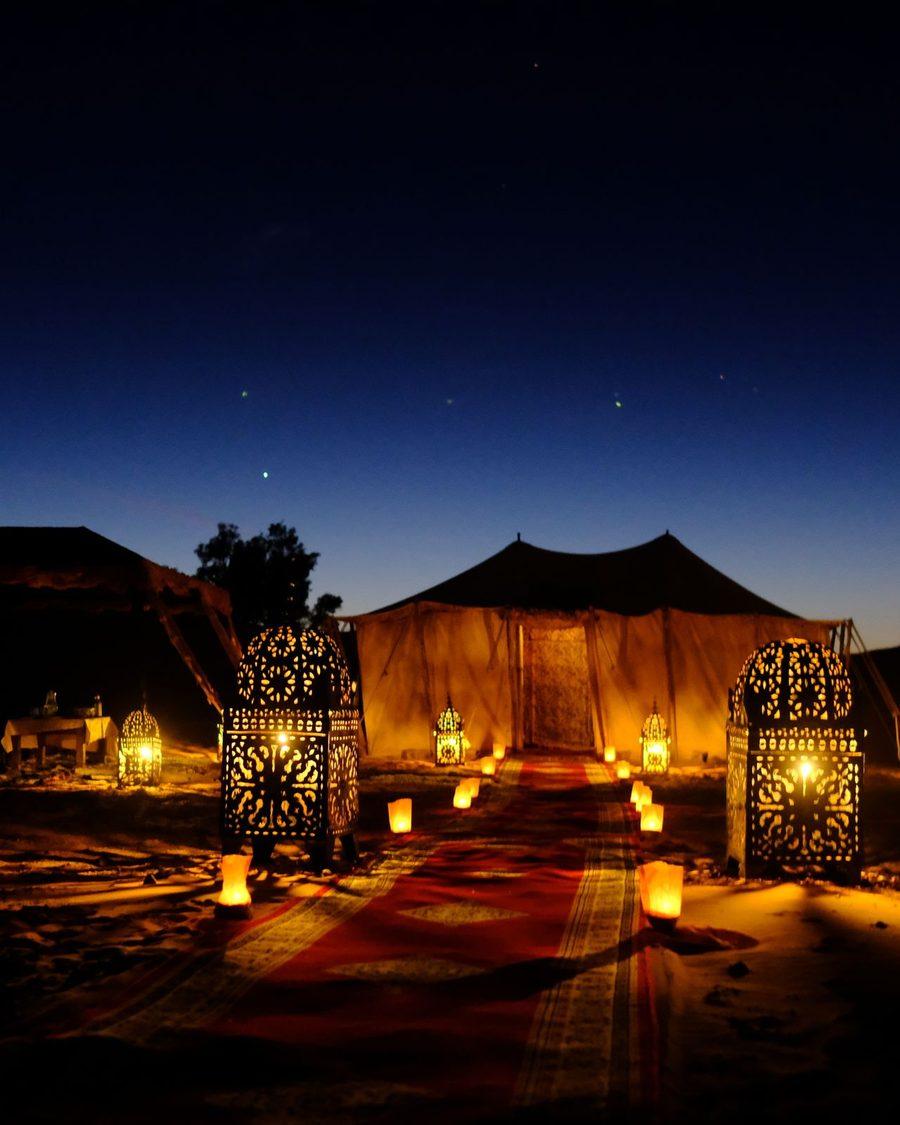
Private tents with beds, clean linen and often an en-suite bathroom in the tent. The right balance for most travellers.
The luxury camp
Large decorated tents, proper bedding, a private bathroom with a hot shower, a carefully prepared dinner and attentive service. Ideal for a honeymoon or a high-end journey.
Whatever the level, we offer camps chosen and tested by our team and, wherever possible, set apart from the others to preserve the calm of the night.
What should you pack for the desert?
- Warm layers: even after a hot day, the night can be cool, and even cold in winter.
- A chèche or a scarf against the wind and sand (you can buy one locally).
- Sunglasses and sun cream.
- A head torch for getting around the camp at night.
- A power bank: electricity is sometimes limited in the camps.
- A small overnight bag, as suitcases stay in the vehicle.
When should you go to the desert?
Spring (March to May) and autumn (September to November) offer the best conditions. In winter, the days are beautiful but the nights very cold; in summer, the days are scorching and you mostly enjoy the late afternoon and early morning. All the details are in our article When to visit Morocco?.
Highlights around Merzouga
- Khamlia, a village known for its Gnawa music, driven by drums and metal castanets.
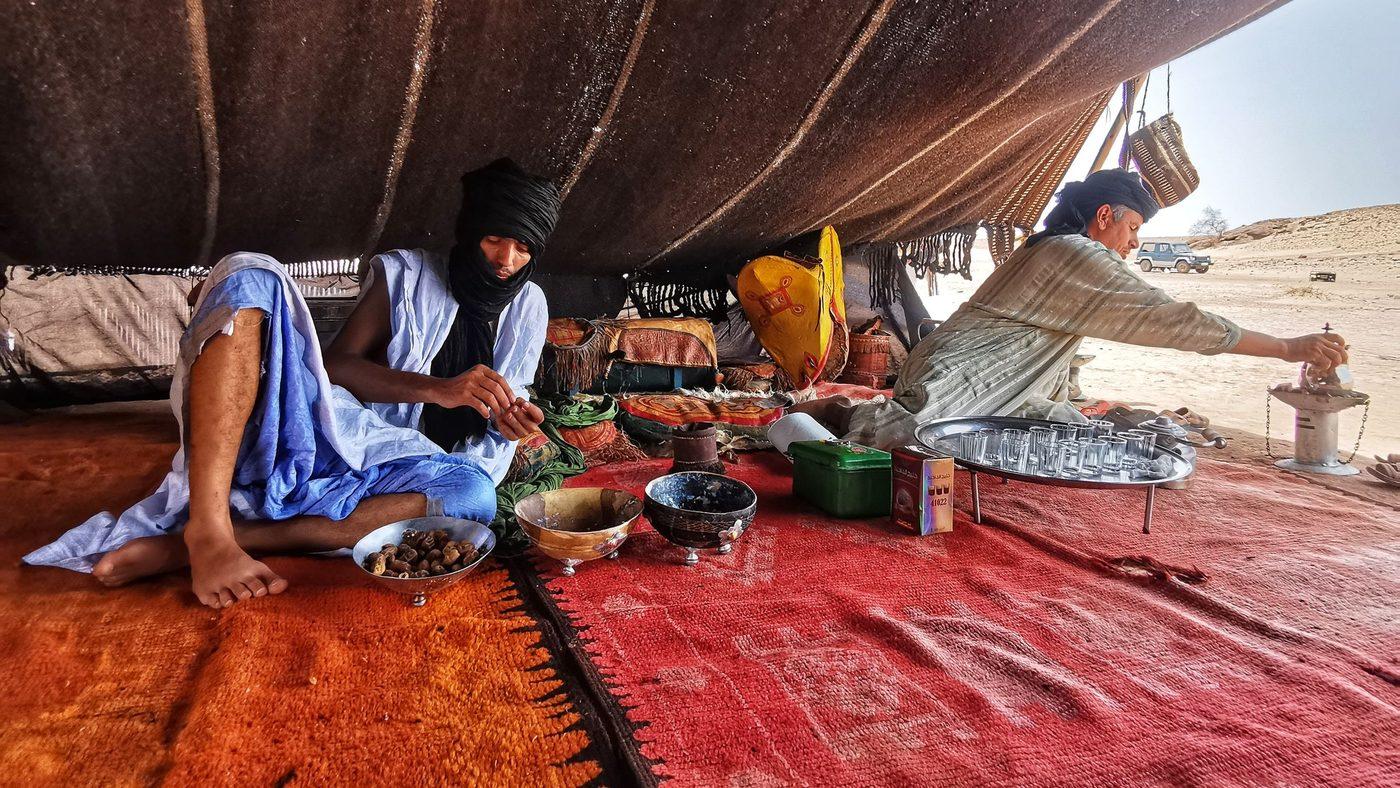
- Meeting a nomadic family, over tea beneath their tent.
- Rissani, with its large market square and medfouna, the stuffed "Berber pizza" baked over a wood fire or in the hot sand.
- Dayet Srij lake, which sometimes fills after the rains and then draws the birds.
- A 4x4 excursion around Erg Chebbi, among dunes, old mines and villages.
Our tours with a night in the desert
- Sahara Bound: 7 days from Marrakech to Fes, via the Atlas and Erg Chebbi, with a night in a luxury camp.
- The Kasbah Trail: 11 days in the deep south, from Agadir to Marrakech.
- From the Strait to the Dunes: 10 days from Tangier to Marrakech, via Fes and the Sahara.
Frequently asked questions
Is it cold at night in the desert?
Yes, especially from November to February, when temperatures can approach 0 °C. Good camps provide thick blankets, but bring warm clothes. In spring and autumn, the nights are simply cool.
Is the camel ride compulsory?
No. For many travellers it is part of the experience, but you can also reach the camp by 4x4. We can arrange either, depending on your preference.
Can you go to the desert with children?
Yes, and it is often their favourite moment. We adapt the pace, choose a comfortable camp and break up the journey so the drive stays enjoyable.
Is there electricity and phone signal at the camp?
Most comfort and luxury camps have electricity, at least in the evening. Mobile signal is often available near Merzouga, but it can be patchy: a good opportunity to disconnect.
Merzouga or Zagora: which should you choose?
For truly great dunes, choose Merzouga and Erg Chebbi. The dunes near Zagora are smaller; Erg Chigaga, further away, is magnificent but requires a 4x4 track. We'll help you choose according to your time and wishes.
How do I book a night in the desert with Levart Voyage?
Message us on WhatsApp or via our enquiry form: we'll suggest an itinerary with the camp best suited to your wishes, and organise the journey from Marrakech, Fes or elsewhere.